Fall football officiating problems rarely begin on the first August scrimmage night. They begin earlier, when a league assumes last year's crew plan will still work, waits too long to confirm who is actually available, and discovers too late that practice-week conflicts, travel, and pay questions were never settled.
Short answer
Youth football leagues should lock in referee crews before August scrimmages by building demand from actual crew positions instead of game counts, confirming late-summer availability before practice ramps up, separating full crews from emergency fill-ins, publishing pay and travel rules before assignments go out, and using game-day check-ins for the first preseason windows. The key is to treat August as an operations launch, not a soft opening.
Why this matters right now
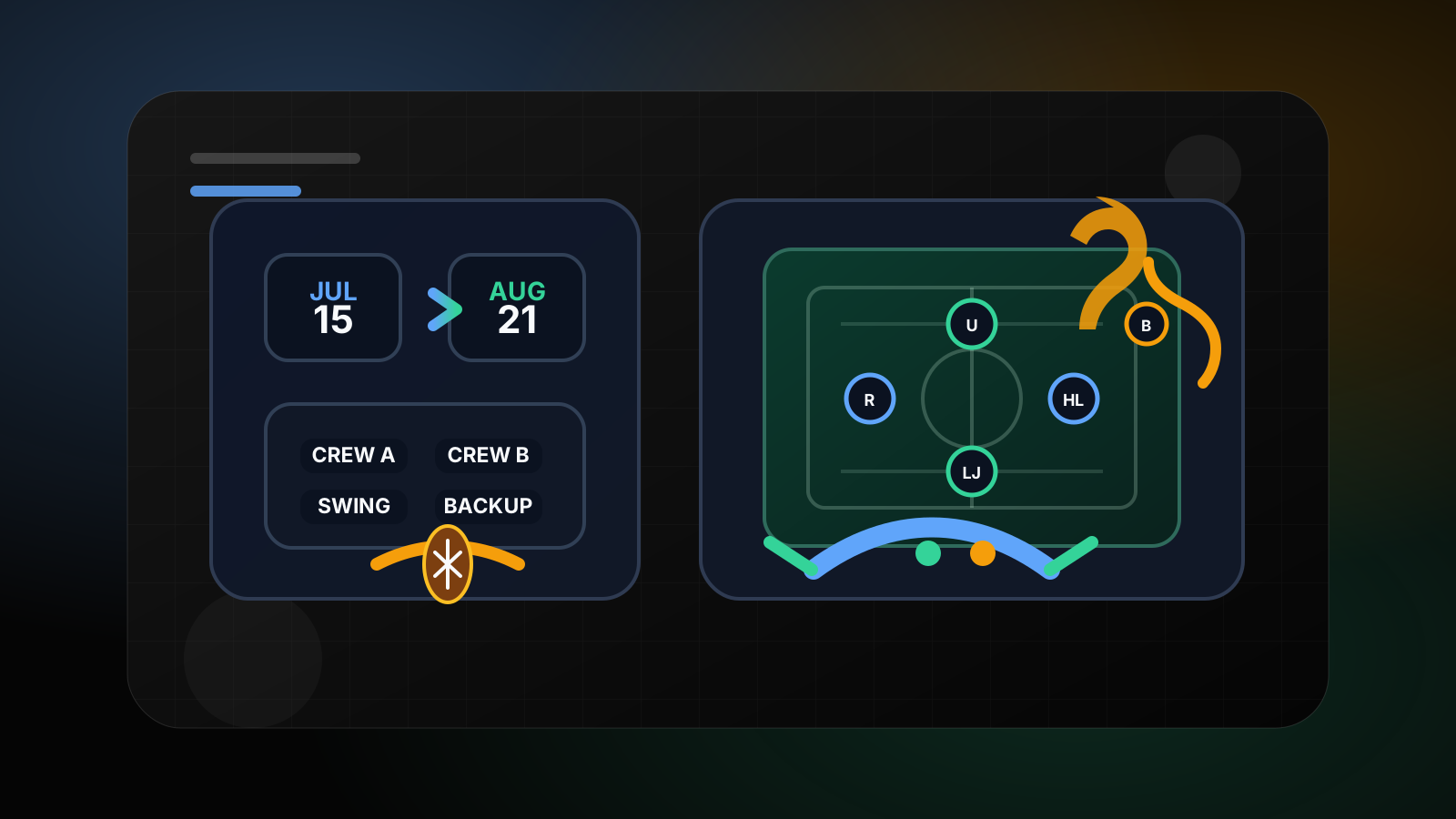
The calendar is already moving. Pop Warner says players begin practicing on July 15 and that season openers are usually held during the last week in August or first week in September. In Georgia, the GHSA says football first practice starts July 27, 2026 and the first contest is August 21, 2026. That is a short runway for leagues that still need to confirm officials, field coverage, travel rules, and backup plans.
The broader pipeline is better than it was at the pandemic low, but it is still not loose enough for sloppy operations. NFHS reported that the 2024-25 survey showed 237,811 registered high school officials, up six percent year over year, while the same NFHS report said a 2023 NASO survey found 79 percent of respondents were taking on more assignments because of the shortage. More officials in the system does not mean your August crew plan will fix itself.
1. Count positions, not just games
Football coverage gets misplanned when administrators count games instead of assignment slots. A four-game Saturday is not just four games. It is a stack of crew positions, arrival windows, travel legs, and recovery time.
- List every preseason scrimmage, jamboree, and week-one game by site and kickoff time.
- Assign the expected crew structure to each event before you contact officials.
- Mark which events can tolerate a reduced crew and which cannot.
- Separate tackle and flag needs if your league runs both.
This is the difference between “we have enough refs” and “we can staff these exact kickoff windows.” Related: football league management software and league commissioner software.
2. Confirm availability around practice season, not around game week
Mid-July to early August is a messy availability window. Officials may still be traveling, working summer schedules, or waiting for school-year routines to begin. If you wait until scrimmage week to ask, the reliable people get overbooked first.
- Set one firm availability deadline for late July through opening weekend.
- Ask for day-by-day and site-by-site availability, not a vague “yes for fall.”
- Flag people who can work regular season Saturdays but not weekday scrimmages.
- Treat missing responses as unavailable for key preseason blocks.
That reduces the most common preseason mistake: building the first football weekends around optimistic assumptions.
3. Separate full crews, swing officials, and emergency single-position backups
Not every official serves the same operational role. Your cleanest preseason plan usually has three layers:
- Primary full crews for your highest-risk or highest-visibility games.
- Swing officials who can cover multiple positions at nearby sites.
- Emergency backups for one or two specific roles.
If you keep everyone in one undifferentiated list, you end up using your most flexible people too early and having no answer when a late scratch hits an important kickoff.
4. Publish pay, travel, and reporting rules before people commit
Preseason football assignments often include awkward edges: weeknight scrimmages, neutral sites, longer drives, or mixed-format events. Handle the business rules before acceptances go out.
- Publish rates for scrimmages, jamborees, and regular-season openers separately if they differ.
- Clarify travel reimbursement, mileage, or crew-based travel handling.
- State check-in or arrival deadlines for each site.
- Explain what happens if weather or format changes cut games short.
That matters because football crews are harder to rebuild at the last minute once one person declines over unclear logistics. Related: referee pay transparency and sports official payments software.
The pay side is not theoretical. GHSA's current 2026-2028 game fee chart spells out separate travel fees and notes that travel is handled on a per-crew, per-competition-day basis. Even if your league uses different numbers, the operational lesson is the same: define the rule set before the day gets busy.
5. Decide where reduced crews are acceptable before the first shortage decision lands
Some preseason events can be reworked if you lose one official. Others should not be improvised. Decide those thresholds now.
- Identify the games that must keep full coverage.
- Identify lower-risk events where modified coverage is acceptable under your local rules and leadership approval.
- Name who can approve a same-day crew reduction or schedule shift.
- Write down the escalation path so the field supervisor is not inventing policy at kickoff.
The wrong time to debate minimum crew standards is when coaches are already asking whether warmups can start.
6. Run check-ins on the first preseason dates, not later in September
Leagues often think of check-ins as a regular-season refinement. In practice, the first preseason dates are when they are most valuable. New routines, unfamiliar sites, and partial availability make August more fragile than a settled October weekend.
- Confirm the next day's assignments the evening before.
- Require on-site check-in for the opening wave of games.
- Watch for missing crew members before coaches discover the gap.
- Connect the attendance record to follow-up and payouts.
Related: game-day official check-ins, official check-in software, and Umply Live.
7. Treat August as a retention test, not just a staffing test
The first few football dates shape whether officials want more of your games. If your scrimmage week is disorganized, pay is unclear, and arrival communication is messy, the same officials who saved you in August may become harder to book in September.
- Debrief the first two weeks while details are still fresh.
- Track which sites or kickoff windows produced the most friction.
- Note where late updates created avoidable stress.
- Protect the people who carried the early schedule so they do not burn out by midseason.
This is where operations becomes retention. A league that feels organized to work for keeps more of its dependable people.
The practical takeaway
Youth football crew problems are rarely caused by one missing official. They are caused by counting games instead of positions, confirming availability too late, leaving pay and travel vague, and waiting until kickoff day to learn who is really on site.
The leagues that handle August best get specific in July. They map real crew demand, lock availability early, separate backup layers, publish business rules up front, and use live check-ins instead of hope. Related: for league admins, Umply features, and assignor software.