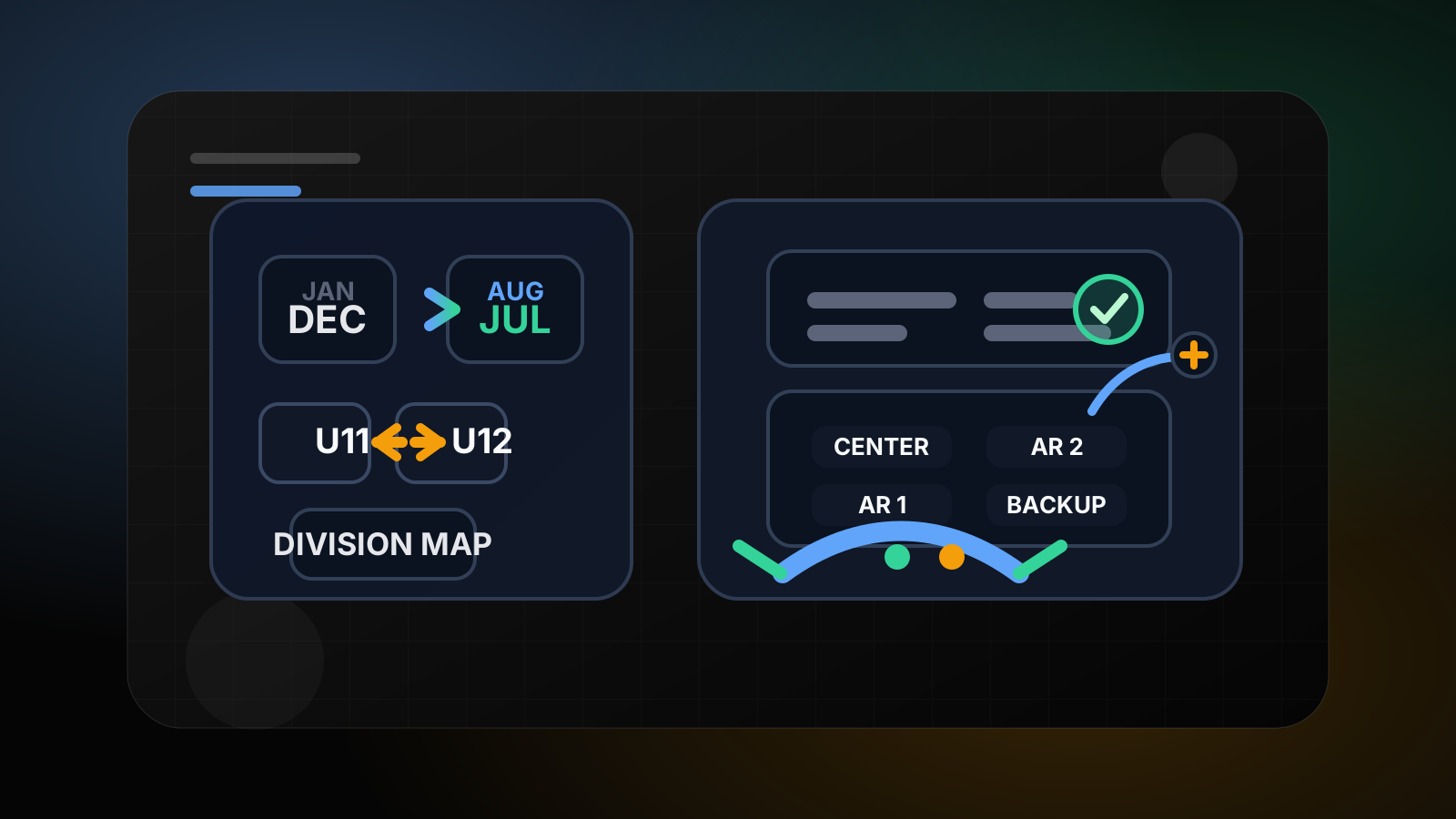
The 2026-27 youth soccer age-group change is easy to misclassify as a registration issue. It is also a referee operations issue. When age bands move, match counts move, kickoff density changes, and the same assignor who thought fall coverage was stable can discover that the fragile blocks have shifted.
Short answer
Youth soccer leagues should adjust referee scheduling for the 2026-27 age-group change by rebuilding demand from the new age bands instead of copying last year's assignment grid, remapping referee levels and crew rules to the revised divisions, updating pay tables and communication templates before assignments go out, and running the first fall weekends with tighter check-ins and backup coverage than usual. The risk is not the policy change itself. The risk is treating it like a label swap when it changes real game-day operations.
Why this matters right now
The timing is immediate. US Youth Soccer says USYS, AYSO, and US Club Soccer will move to an August 1 to July 31 age-group cycle starting with the 2026-27 season/registration year. US Club Soccer says 2026-27 player and staff registration was anticipated to open June 1, 2026 and that the first day of the 2026-27 season is anticipated August 1, 2026.
Demand conditions are not getting quieter while admins absorb that change. Google Trends currently features a dedicated FIFA World Cup 2026 U.S. experience, and Google published a June 2026 update showing Search surfacing live soccer scores, brackets, stories, and social content during the tournament. That is another signal that soccer search demand is elevated right now. See Google's June 2026 soccer search update.
At the participation level, the Sports & Fitness Industry Association says outdoor soccer participation in the United States reached 16.8 million in 2025, an all-time high, and that Google Trends data for "where to play soccer" in the U.S. hit an all-time high in 2025. For league administrators, that means fall soccer operations are changing at the same time soccer attention is elevated.
1. Rebuild referee demand from the new age-group map, not last year's schedule
The first mistake is assuming the old schedule shape still tells you where the pressure points are. Even if your total team count stays similar, the new age-band structure can change:
- Which divisions play at which pitch sizes.
- Which age groups need full crews versus modified crews.
- Which kickoff windows stack the most matches.
- Which divisions create the hardest center-referee demand.
Build the fall referee model from the new division structure first, then calculate slot demand by day, site, and age band. If you start by copying last year's spreadsheet and relabeling the rows, you will miss where the new shortage actually sits.
2. Remap referee levels and crew rules before publishing assignments
The age-group change is not only about players. It affects what work you ask officials to do.
Before the first assignment wave goes out, document:
- Which divisions can run center-only.
- Which divisions need assistant referees every time.
- Which divisions are appropriate for newer referees.
- Which match blocks should be reserved for your most reliable centers.
This is especially important if your referee pool includes teens or newer grassroots officials. Related: recruiting teen referees, mentorship retains new officials, and youth soccer growth and referee demand.
3. Update pay tables when the division map changes
If your division labels change but your pay rules stay vague, you create immediate friction with officials. Publish the revised table before acceptance begins:
- Rate by division and role.
- Whether assistant-referee rates change with the new groupings.
- Expected match length for each division.
- Any tournament, travel, or same-day exception rules.
This matters because the age-group shift can create new questions about what is "the same game" versus a different level of assignment. Officials should not have to infer pay from old labels. Related: why referee pay transparency matters and sports official payments software.
4. Separate team-registration communication from referee communication
Clubs and families will be focused on roster placement, school-year alignment, and age-group calculators. Referees need different information. Send them their own operations-specific update that explains:
- What the new division names or labels mean.
- Which matches will feel different from last year.
- What their likely first assignment range will be.
- What changed in pay, check-in, or field expectations.
If the only communication is a player-registration memo forwarded later to officials, the assignor will absorb the confusion one text at a time.
5. Treat the first two fall weekends as a transition period
Early fall will tell you whether the new map works in practice. Plan those weekends like a rollout, not a routine Saturday:
- Use tighter day-before confirmation.
- Keep a short backup list for the highest-risk divisions.
- Flag sites where multiple new age groups are stacked together.
- Watch where games run long or require more support than expected.
That reduces the chance that one bad first weekend creates a wider referee-retention problem. Related: game-day official check-ins, sports official check-in software, and Umply Live.
6. Audit the league system fields that depend on age-group labels
Admins usually think first about registration forms. The operational audit needs to go wider. Review every place the old labels appear:
- Schedule templates.
- Assignment rules.
- Referee pay exports.
- Reminder templates.
- Check-in and reporting workflows.
- Board reports on uncovered games by division.
US Club Soccer specifically notes that guidance for registrars and administrators managing the change in GotSport would follow. That is a useful signal for any league: the transition is operational enough that software and workflow mapping need explicit attention, not assumptions. Related: youth soccer league operations and referee scheduling software.
7. Use the change to rebalance which games develop new referees
One practical upside of a division reset is that it gives leagues a reason to rethink the development ladder. Instead of defaulting to the same old assignment habits, decide deliberately:
- Which divisions are best for first centers.
- Which sites have the best mentor coverage.
- Which kickoff clusters are too chaotic for new officials.
- Where older teen referees can grow without being overloaded.
The leagues that handle the change best will use it to improve assignment quality, not just preserve old staffing patterns.
The practical takeaway
The 2026-27 age-group shift is not only a registration change for youth soccer leagues. It changes referee demand, communication, pay clarity, and where early-season coverage is most fragile.
Leagues should rebuild the fall officiating plan from the new division map, republish referee-facing rules before assignments open, and treat the first weekends as a monitored transition. That is the difference between a policy update and a schedule that actually holds. Related: soccer league software, Umply features, and league commissioner software.